It’s ironic how the Thoroughbred is often overlooked in rodeo history. The speed and grit that the breed famously possess is exactly what the sport demands. And although they’ve been largely forgotten or ignored, these horses have been competitive on the barrel pattern for generations. One of the greatest Thoroughbreds to ever run down the alleyway was Cariboo Chief. This is his story.
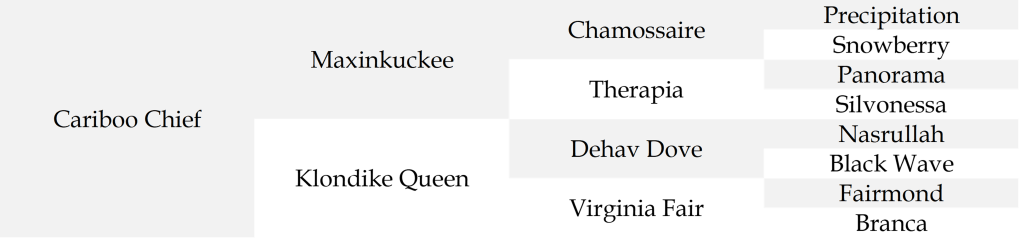
Cariboo Chief was foaled on May 1st, 1970. He was bred by J. A. Charlesworth in Alberta, Canada. “Chief” was by Maxinkuckee, an English Thoroughbred that won the 1959 Bashford Manor Stakes and 1961 Speed Handicap before he was imported to Canada. Klondike Queen, Chief’s dam, was a race-winning granddaughter of Nasrullah. Chief made thirteen starts and won one five-furlong race at Northlands Park in Edmonton, Alberta.
Chief was owned by Randy Watt, a multiple stakes winning trainer in Alberta. He was later sold to Melvin Lawes, the brother-in-law of Anne Lawes. In the spring of 1977, Anne purchased Chief from Melvin for $600. She had to borrow $400 from the bank, but it turned out to be a great investment. Anne says that she is forever grateful to Randy and Melvin for the opportunity to own Chief.
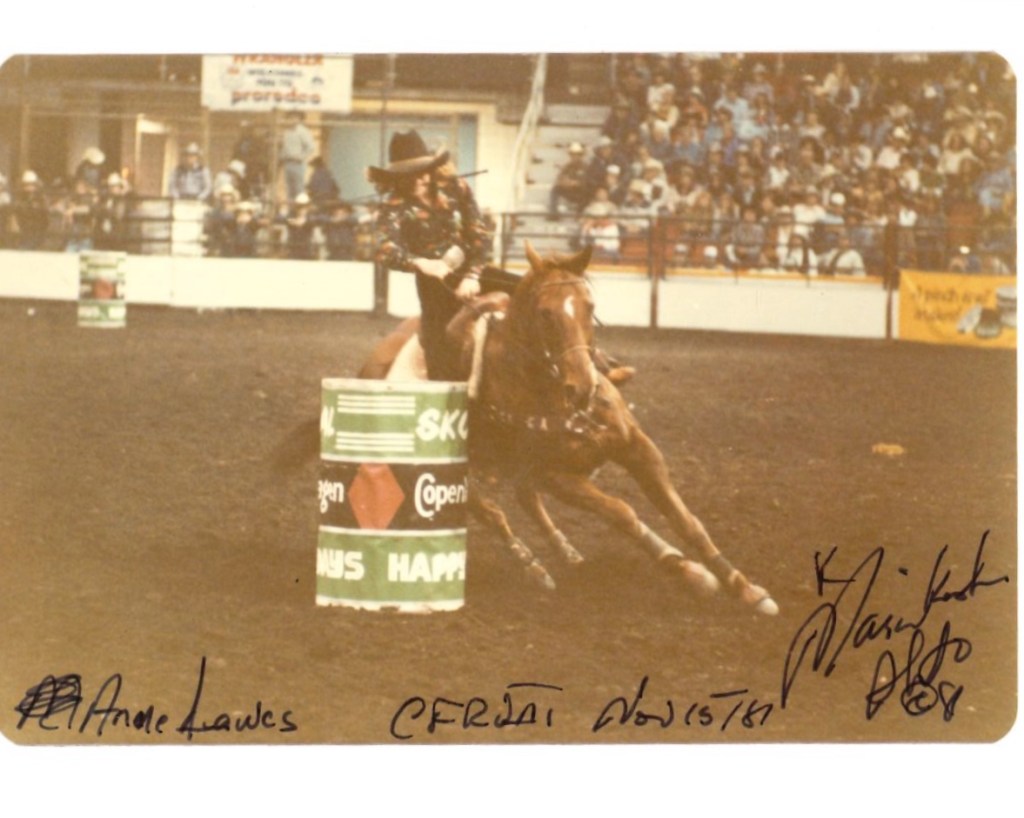
Chief was only track broke so Anne worked on getting him bending, flexing and moving off her leg. Once he was handling better, she started him on the barrel pattern. They went to their first rodeo later that year and won both the Ladies and Open barrel race.
In 1978, Anne started hauling Chief to Canadian Cowboys Association rodeos. At the time, the CCA included some of the best barrel racers in Canada. Anne and Chief split the win three ways at a CCA rodeo and placed at others.
The following year, Anne bought her Canadian Girls Rodeo Association card. The CGRA was the governing body of barrel racing at the Canadian Finals Rodeo, Canada’s equivalent to the National Finals Rodeo in the U.S.A.
By July, Anne had moved into first in the CGRA standings. She was coming home from a rodeo when a mechanical malfunction caused her truck and trailer to roll. Chief was severely injured. A wound on the inside of his hock required daily care and dressing changes. He was out of competition until October. When he returned to competition, he won the last qualifying rodeo for the CFR. Anne secured her CFR qualification in ninth place at a time when they took the top ten. The top twelve contestants in each event qualify qualify for the CFR today.
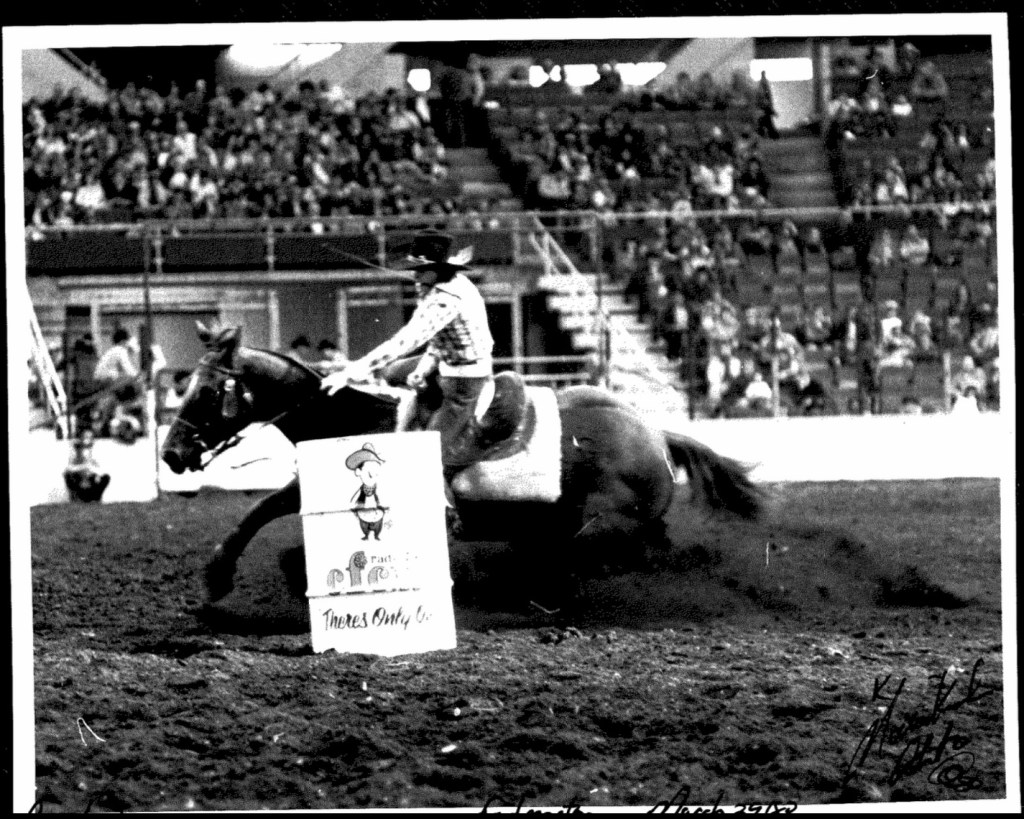
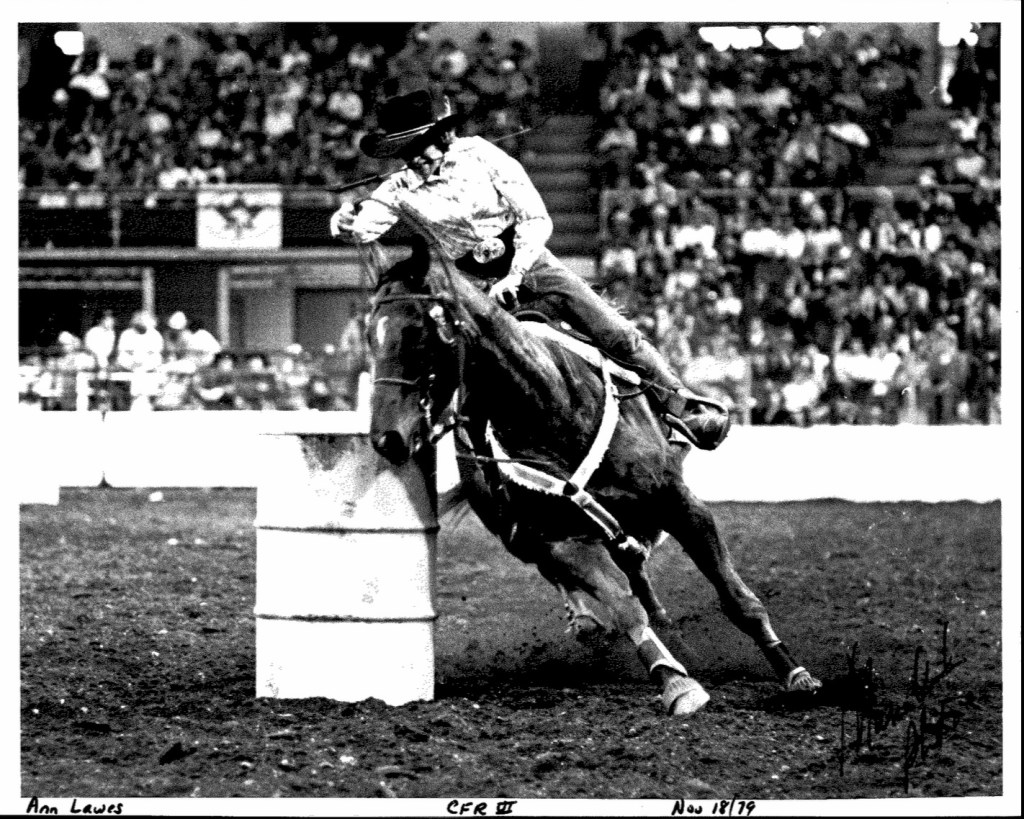
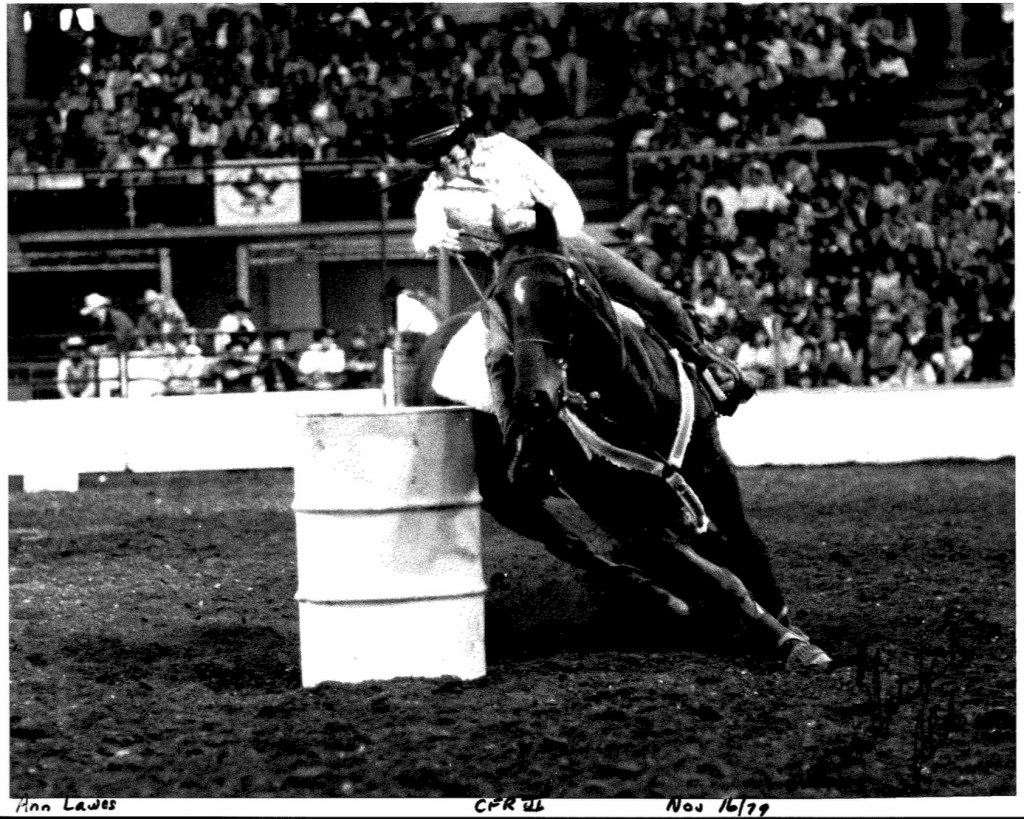
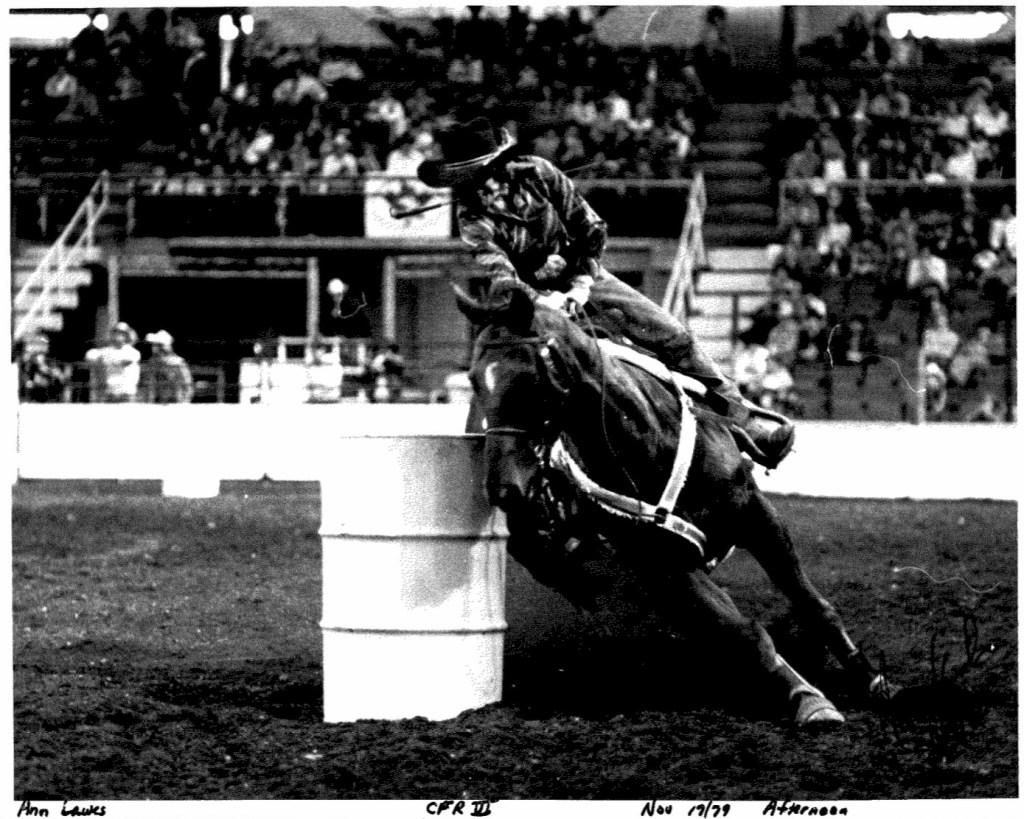
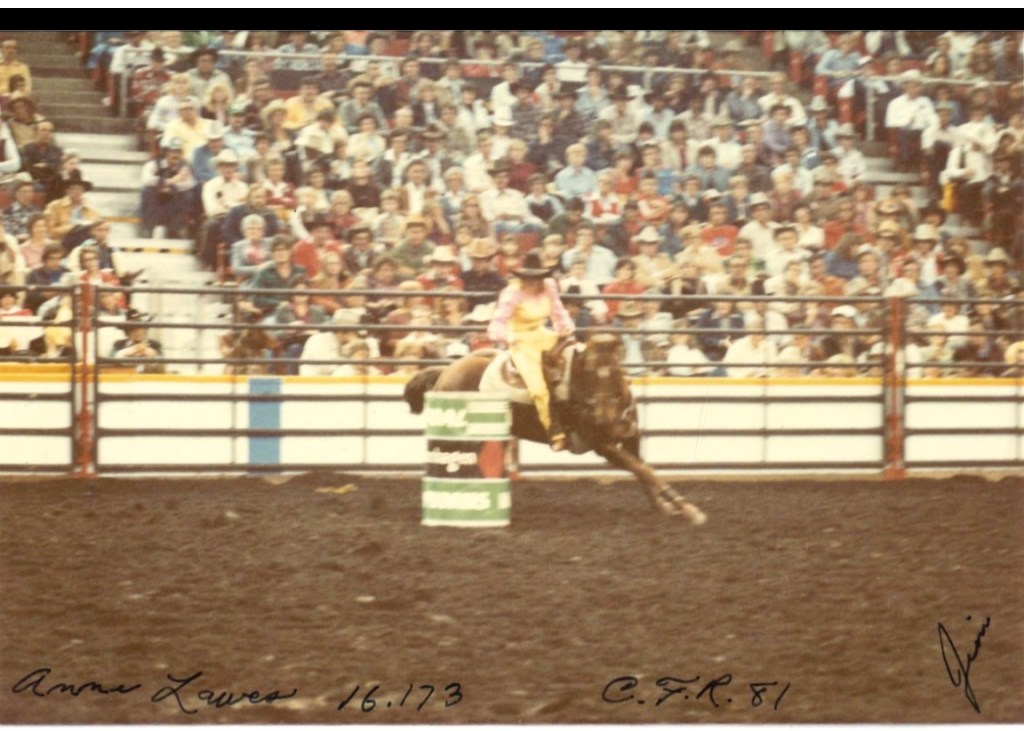
Anne and Chief tipped barrels at the 1979 CFR, but came close to winning the championship title. Anne did win Rookie of the Year, which is a coveted title in rodeo. She also qualified for the CCA Finals that year and was runner up.
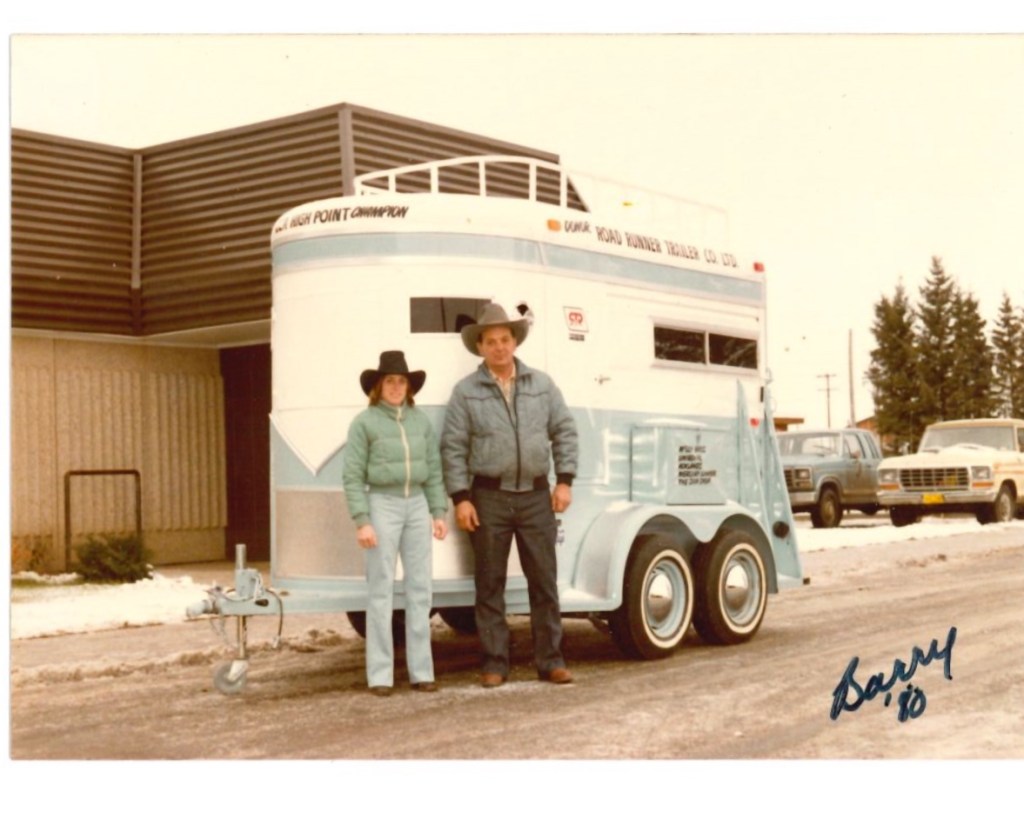
In the spring of 1980, Chief was exposed to an active case of strangles. He contracted the infection and almost died. Once again, Anne was treating him daily. He eventually recovered and returned to the rodeo arena later that summer. Anne and Chief went to CCA rodeos and qualified for the CCA finals. They won the barrel racing and the High Point Championship at the 1980 CCA Finals. They won a trailer to use for a year.
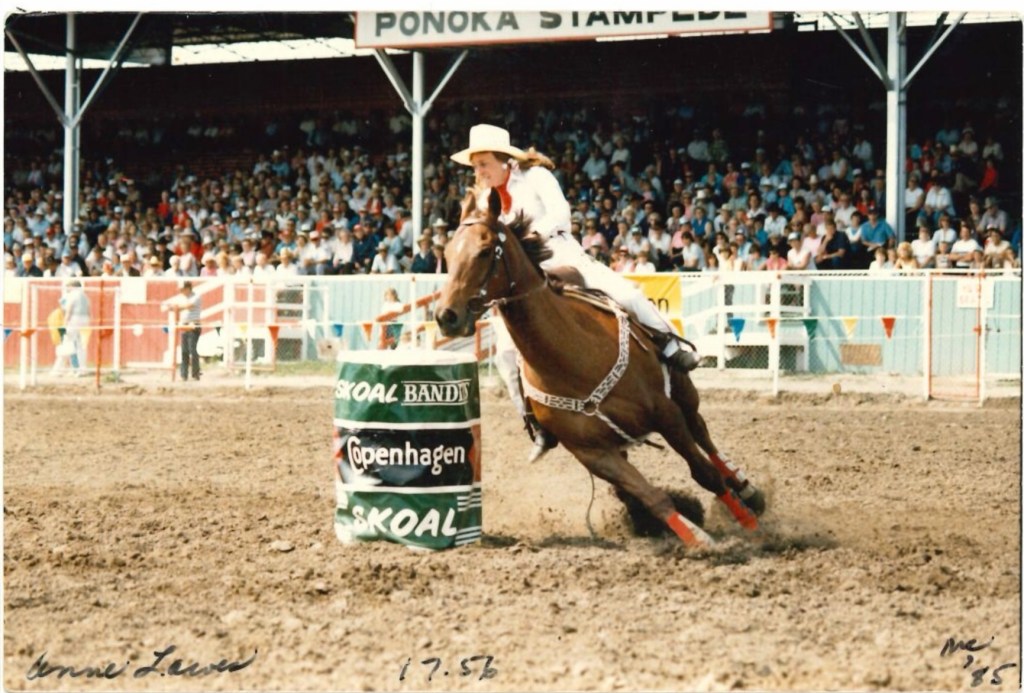
In 1981, Anne and Chief were winning everywhere and leading the Canadian standings! The Canadian Professional Rodeo Association had a late series of rodeos in Eastern Canada. Due to a work commitment, Anne was unable to attend. She was one of three people who had ever earned more than $10,000 in a single season, but she lost the year-end title by about $400. Anne and Chief did win the 1981 North Central Circuit Championship, which was a respectable consolation!
Later that fall, Chief was diagnosed with a blood clot by his spinal cord above his tail. His hemoglobin kept dropping. In addition to the blood clot, he also got laminitis after a neighbor left the gate open on Christmas and he got into the granary! Anne had to have him stand with his legs in five-gallon buckets of ice water and rotated them around the clock. He also developed a clostridium infection and nearly died again! The muscle in his hip decayed. It had to be lanced and gobs of puss poured out. With vigilant care, Chief did recover. He was left with a huge scar on his hip and spent the next two years in the pasture.
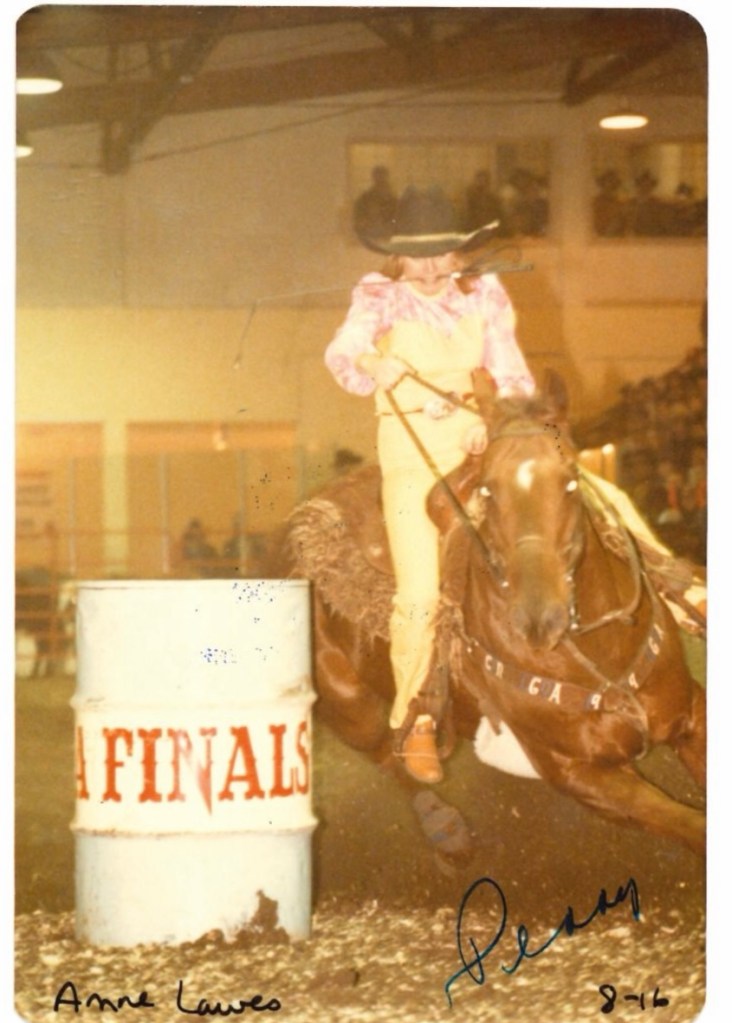
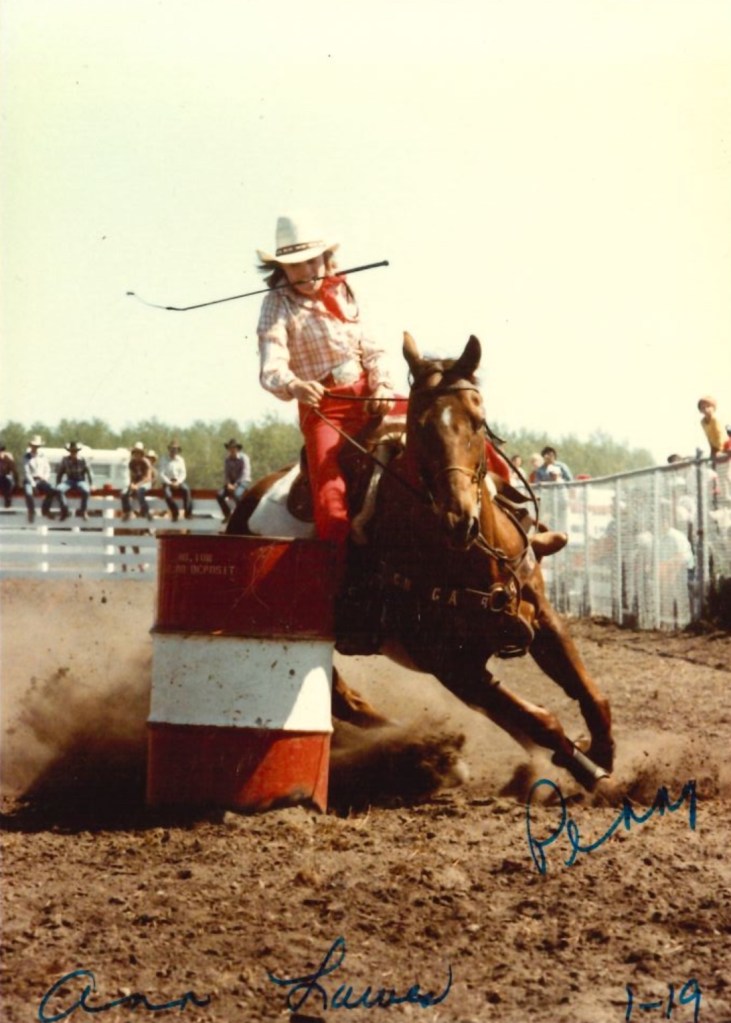
Anne qualified for the CFR in 1982 and 1983 on Jubal Jack, a Quarter Horse that she seasoned after Chief foundered. In 1984, Anne watched Chief run across the pasture leading the rest of the horses. When he did not appear to take a lame step, she decided to condition him for barrel racing again. He immediately started winning and qualified for the Lakeland Rodeo Association Finals, which he won!
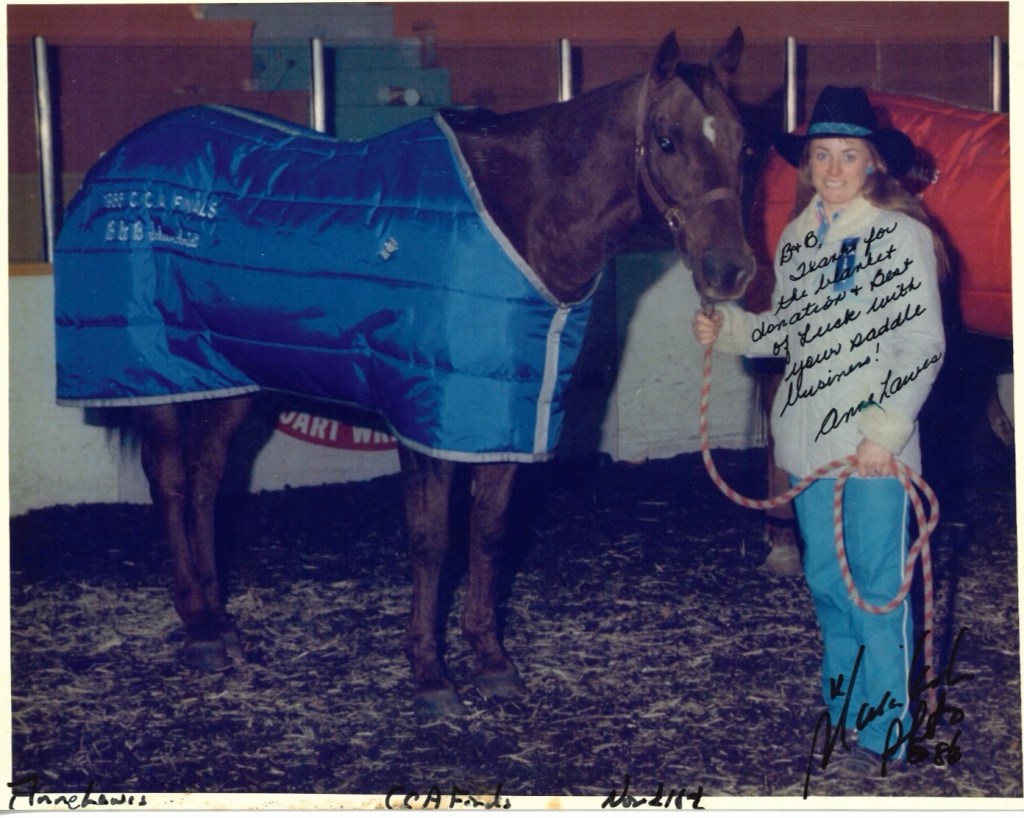
In 1985, Anne and Chief returned to the CFR. The following year, Anne was the season leader at the 1986 LRA Finals. In 1987, Anne and Chief won the Coors Shootout Series and Labatt’s Series and qualified for another trip to CFR! Over the years, Chief was voted Barrel Horse of the Year in the CCA and LRA.
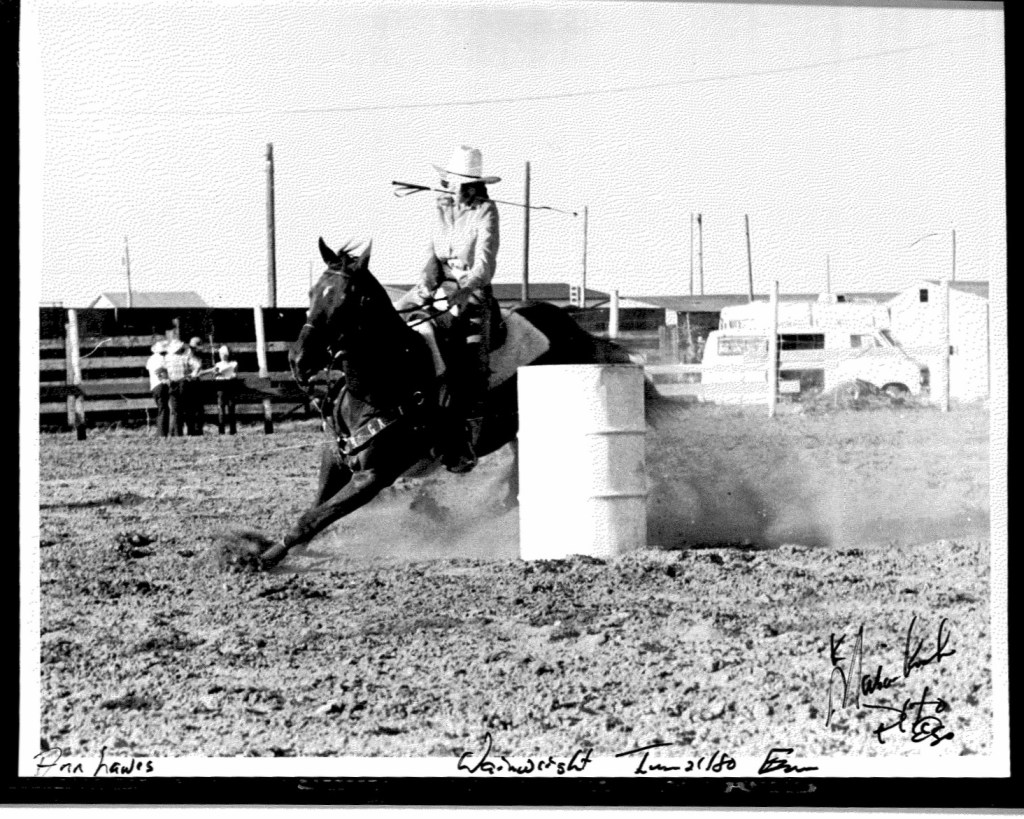
In 1988, Anne moved into the Top 10 in the Canadian standings, but she had to quit rodeoing in order to get enough hours to keep her nursing license. She decided to retire Chief then. At age eighteen, she felt like he deserved the rest.
Although they never won a CFR Champion title, they did run the fastest time of the finals multiple years! Anne recalls that she ran Chief in a cheap Tom Thumb bit with a leather chin strap. He would grab the bit and run when they were headed up an alley. If they ran out on a track, he would go halfway around before she could get him stopped, but she never wanted more bit on him. Chief could handle any ground because he stood up in his turns. He could run in big outdoor arenas or tiny indoors and never run by a barrel. After they tipped barrels at their first CFR, Anne and Chief rarely hit barrels.
Chief ate five gallons of oats per day and all the alfalfa hay he wanted. He never had his joints injected and never ran on drugs.
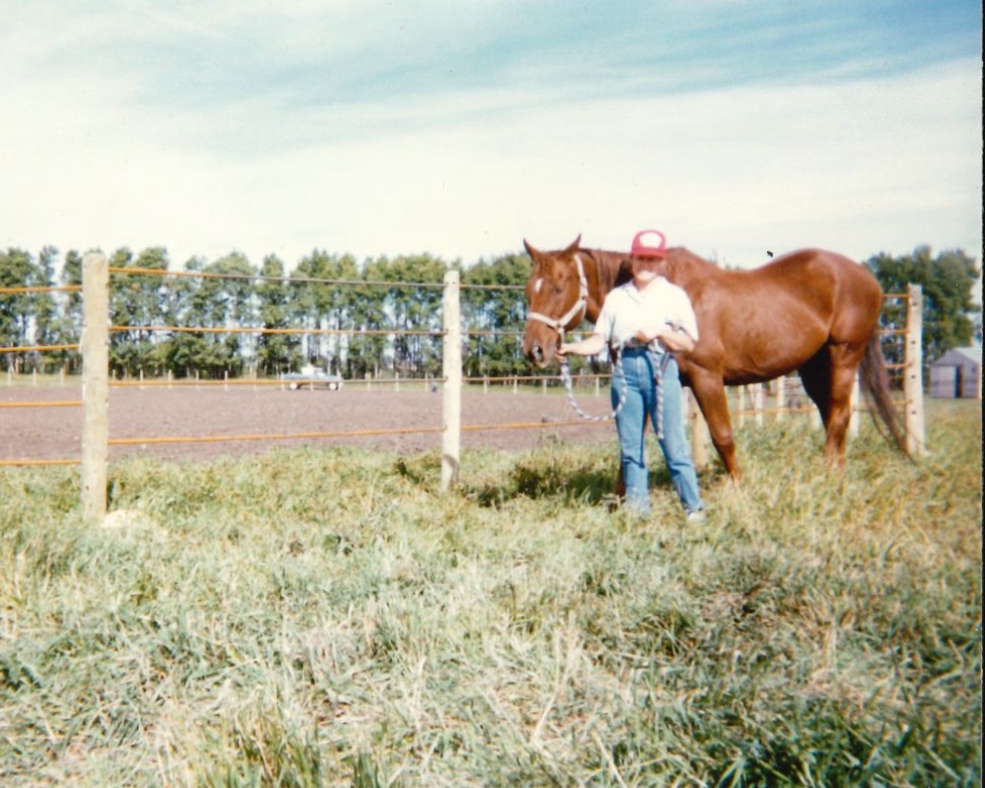
Anne says that she shared a special bond with Chief. She loved him very much. She thinks that his story is a testament to the resilience and fortitude of the Thoroughbred breed.
Cariboo Chief enjoyed his retirement until he passed away in his twenties. He wasn’t a purpose-bred barrel horse, but in five trips to the CFR, he proved that the right Thoroughbred, with the right rider, can hold their own against the best in the world!
Thank you to Anne Lawes for submitting Chief’s story.

 The Western Thoroughbred