Little Lena Bars was foaled on May 8th, 1960 in Oklahoma. She was bred by AQHA Hall of Fame inductee Walter Merrick. She was the second foal by Three Bars and out of Lena Valenti. The first was Lena’s Bar. Lena’s Bar made 76 starts and won 24 races. She defeated AQHA Champions Go Man Go, Double Bid, Vandy’s Flash and Vanetta Dee. As a broodmare, Lena’s Bar produced Double Dancer, Delta Rose, Jet Smooth, Mayflower Ann, and most famously, East Jet. She was inducted into the AQHA Hall of Fame in 2003.
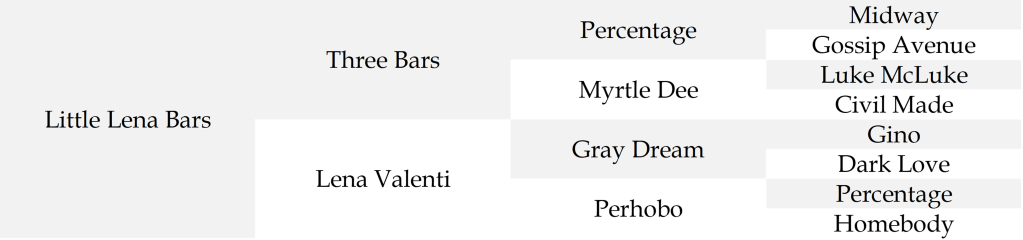
Lena’s Bar was conceived when Three Bars was standing in Tucson. By 1959, Vail had moved the stallion to Apple Valley, California. Merrick had to haul Lena Valenti an additional 400 miles to get her bred to Three Bars for the second time, but it was worth it. Little Lena Bars became one of the fastest quarter racehorses of all time. “After what Lena’s Bar had accomplished on the track, I didn’t see how Little Lena Bars could ever measure up,” Merrick told Frank Holmes for his book Wire to Wire: The Walter Merrick Story. “But I put her in race training as a 3-year-old. It didn’t take long for me to figure out that I wasn’t going to have to worry about her spending any time in the shadow of her big sister.”

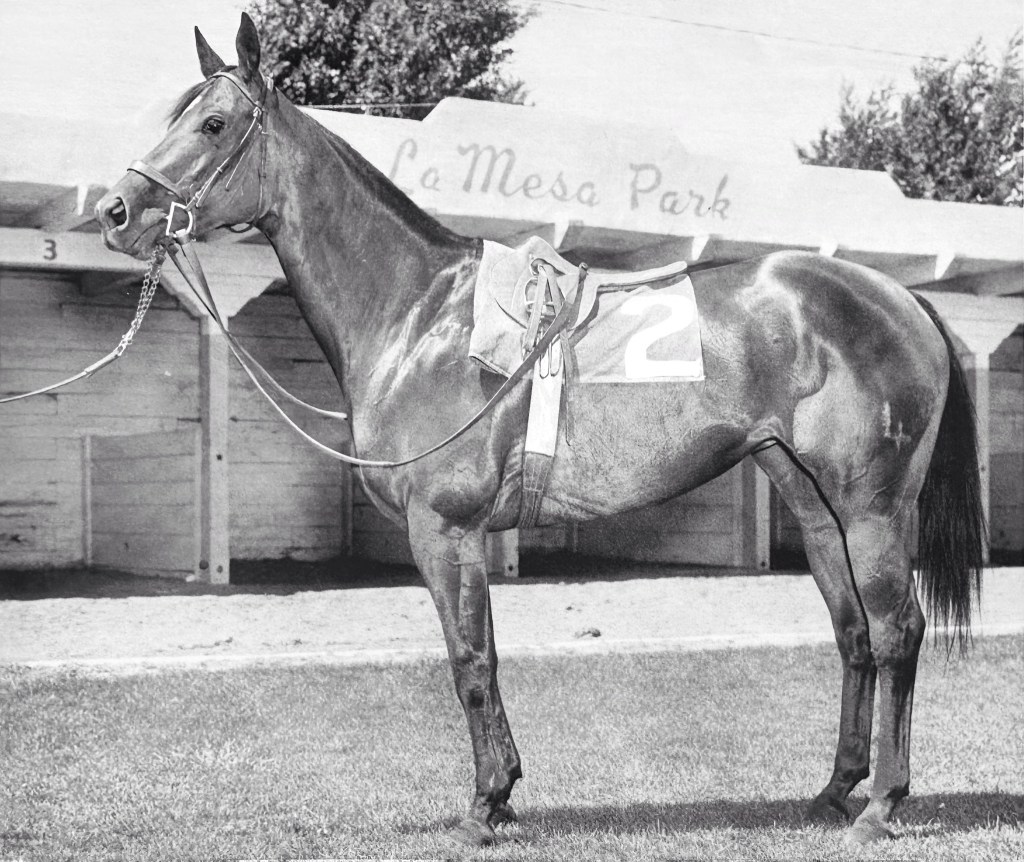
On June 1st, 1963, Little Lena Bars finished third in her debut at La Mesa Park in Raton, New Mexico. In her next start, she broke her maiden and set a new track record at La Mesa for 440 yards in 21.960 seconds. Three weeks later, she lowered that record to 21.920 seconds. Little Lena Bars won seven straight races during her three-year-old campaign including the Captain Dick Handicap at La Mesa, as well as the C L Maddon’s Bright Eyes Handicap and Shue Fly Stakes at Albuquerque. In addition to her stakes wins, she also set her first world record at 330 yards.
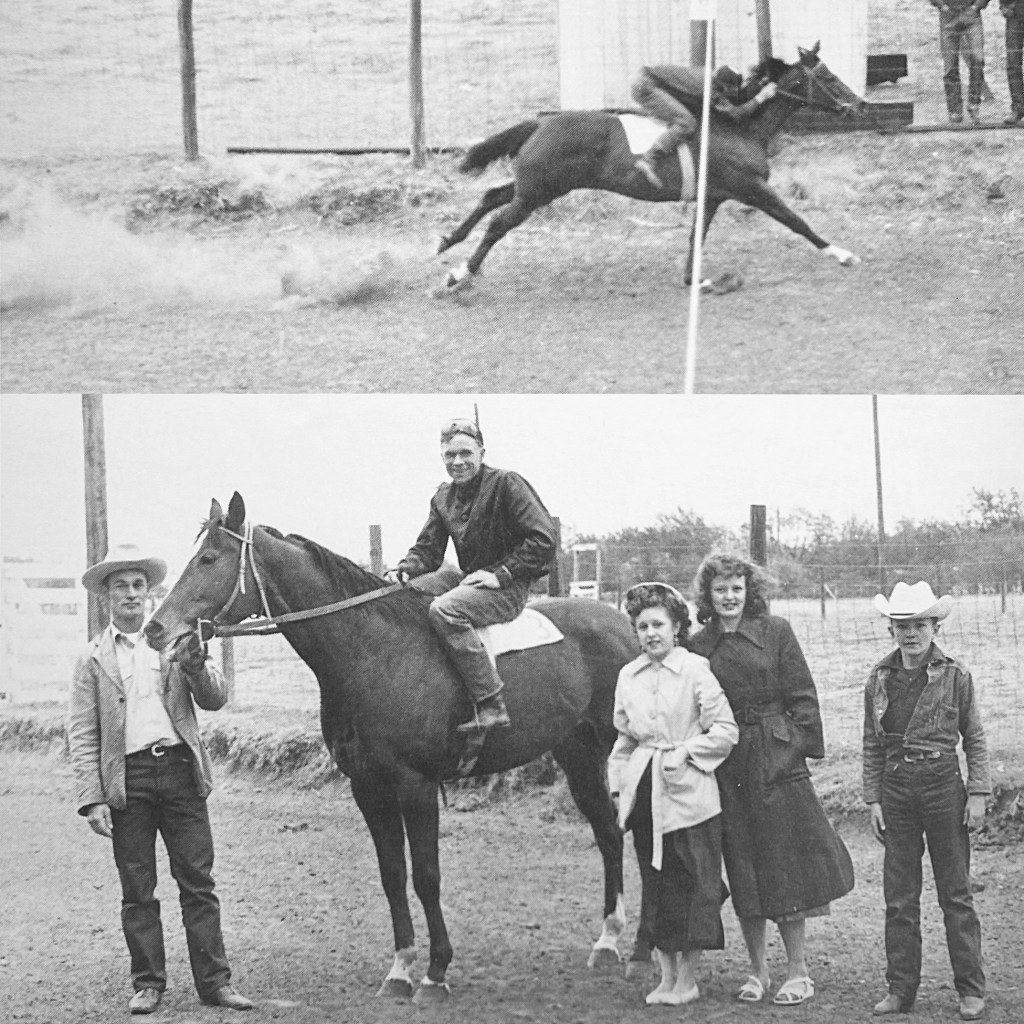
In the spring of her four-year-old year, Little Lena Bars won three Allowance races at Sunland Park. She then set about rewriting the quarter racing record books. Her barrage began in the fourth race of the All-Distance Quarter Horse Championship Series at La Mesa Park. She lowered her world record for 330 yards to 16.670 seconds. Two weeks later, she set a new world record for 300 yards in 15.480 seconds in the fifth race of the series. The results of the sixth and seventh races were the same. In both of those races, Little Lena Bars set the world records for 250 and 220 yards. Two weeks after the series concluded, she was entered in a 220-yard Allowance race. She lowered her world record for 220 yards to just 12 seconds flat.
“At the time Little Lena Bars was breaking all those records, Bud Warren was the chairman of the AQHA racing committee and I was a member of it,” Merrick told Homes. “In the spring of 1965, the AQHA convention was in Fort Worth. I attended it and sat in on the racing session. Bud called the meeting to order and began his opening remarks by saying, ‘Boys, we’ve got a little problem that we need to take care of. There’s a Thoroughbred mare who owns all our world’s records, and we can’t have that.’ Well, I knew who he was talking about and I knew what was going to happen. So I just excused myself and left the room.

“Later on, I asked one of the other committee members what they had decided to do. The long and short of it was that they did away with recognizing world’s records. Their reasoning was that there were too many variables that went into a world’s record that they had no control over. Things like irregular timing procedures on non-pari-mutuel tracks. To be honest, I guess I could see their point. There were some tracks that really wanted all their times recognized, but just weren’t up to snuff when it came to regulating the races and reporting the results. But La Mesa Park wasn’t one of them. There wasn’t anything wrong with the way they ran their races. Bud hit the nail right on the head with his opening remarks. They just couldn’t have a mare like Little Lena Bars owning all the Quarter Horse racing records.”

In addition to overlooking world records, the AQHA deleted all mention of records set by Thoroughbreds. They also banned Thoroughbreds from participating from major AQHA races, although those changes came later. Little Lena Bars was able to run in the All Distance Championship Series again as a five-year-old. She won the first race of the series and placed fourth in the second race. She retired in the middle of the series due to an injury to her hindquarters. Her final official record was 31 starts, 16 wins, 8 seconds and 4 thirds, with $18,454 in earnings, which is the equivalent of about $185,000 today.

In 1966, Little Lena Bars was bred to Tonto Bars Hank. The resulting foal, All Lit Up, earned Racing and Performance Register of Merits. He earned 10.0 Halter points, 10.0 Hunter Under Saddle points and 20.0 Western Pleasure points. All Lit Up went on to sire 48 AQHA registered foals. His best starter, Kelly Macall, placed second in the 1980 Indiana State Fair Derby. All Lit Up also sired Superior Halter mare Alluette. She produced grand champion halter horses The Impressario, The Finale 333, The Marquis 333, Misters Cando and Lasting Connection.
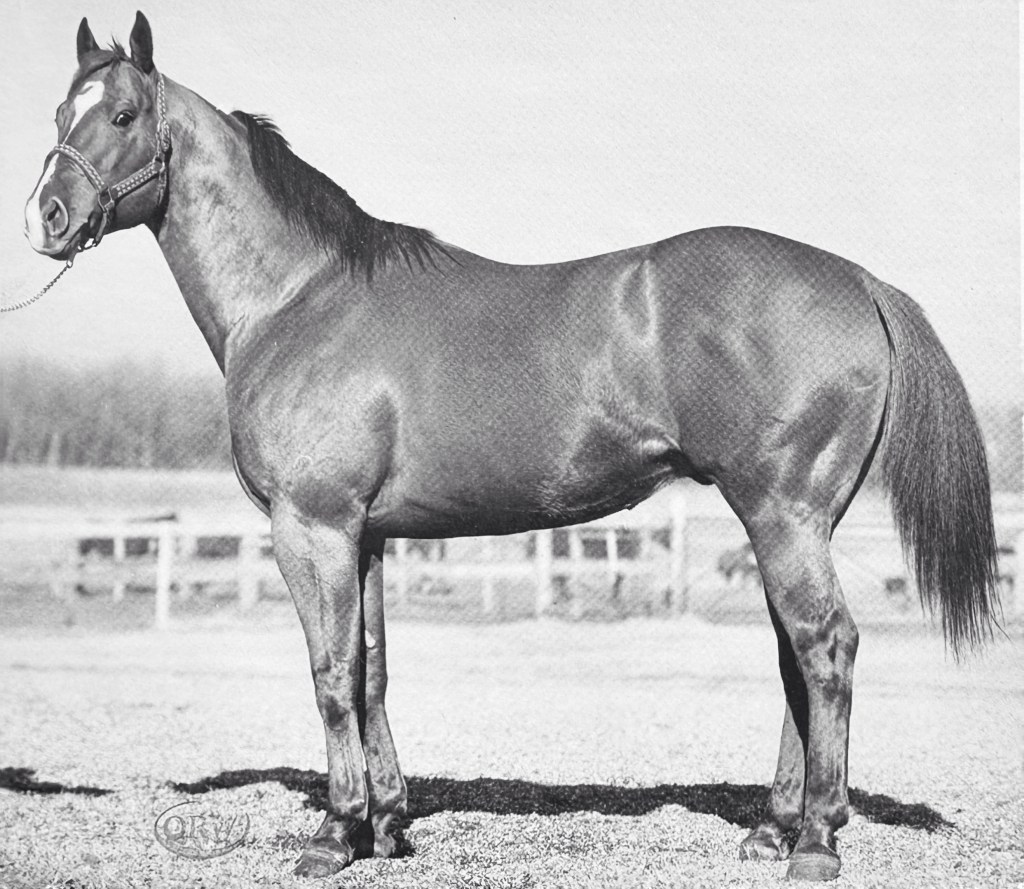
Unfortunately, the injury that ended Little Lena Bars’ career also ended her life. Shortly after she foaled All Lit Up, she became paralyzed in her hindquarters. “She’d get down and couldn’t get up, so finally we had to put her to sleep,” Merrick said. “I’ve always regretted losing her so early. She never had a chance to show what she was capable of producing.”
The legacy of Little Lena Bars has been largely wiped out. Her records have been erased. But this petite mare upended Quarter Horse racing. Their response to her prowess was to ban Thoroughbreds from major Quarter Horse meets. The reason Thoroughbreds are not allowed to enter graded Quarter Horse races today is not because they cannot outrun them – it is because they can.
Sources: Equineline, Equibase, American Quarter Horse Association, Wire to Wire: The Walter Merrick Story, All Breed Database

 The Western Thoroughbred