El Kentuck was foaled on March 22nd, 1958. He bred by J. Rukin Jelks on his ranch near Tucson, Arizona. Jelks grew up on a farm near McCroy, Arkansas. He contracted tuberculosis after he served in World War I. His parents sent him to the University of Arizona, where the dry climate was well-known for alleviating tuberculosis symptoms. Jelks graduated with a degree in animal husbandry and found work in automobile sales. He later bought a ranch and started match racing Thoroughbreds at small tracks around the southwest. He improved the quality of the horses in the area by bringing in Kentucky-bred stallions. In 1936, Jelks and his second wife, Mary Haskell, the sister of AQHA Hall of Fame breeder Melville Haskell, purchased Master Bunting. The bay Thoroughbred stallion became one of Jelks’ top match racing horses. He later sired AQHA register of merit earners Virginia Reel, Dear One and Baby Girl Bunting.

In August of 1943, Jelks and his third wife, Frances Barry, traveled to the first Keeneland yearling sale. Jelks inspected the several hundred yearlings scheduled to go into the sale without opening the catalog. He wanted to find a horse that had the right conformation without being influenced by pedigree. Piggin String appealed to Jelks more than any other horse in the sale. He purchased the colt and shipped him back to Arizona to begin race training. Piggin String went on to set multiple track records from 330 to 550 yards. He was twice recognized as a Champion Quarter Running Stallion by the American Quarter Racing Association, an organization that Jelks, along with Haskell, R. C. Locke and Jake Meyer, founded and governed. Piggin String went on to sire 164 registered Thoroughbred and Quarter Horse foals including Rukin String, the 1952 AQHA Racing Champion Two-year-old Colt, 1953 AQHA Racing Champion Three-year-old Colt and 1953 World Champion Horse.

By the 1940s, Jelks and Haskell had formed a firm partnership. They bought Thoroughbred and Quarter Horse mares and bred them to Piggin String, Three Bars and Spotted Bull. This is how El Kentuck came to be. He was sired by Spotted Bull, a Kentucky-bred stallion that made nineteen starts and won four races on official Thoroughbred tracks. He was purchased by Dink Parker and Ed Echols and brought to Arizona where he entered Quarter Horse races a Rillito and earned an AQHA register of merit. He was later syndicated. Haskell bought shares and stood the stallion at his Rincon Stock Farm. Spotted Bull sired champions Arizonan, Table Tennis and Panama Ace.

El Kentuck was out of Retiring, a race-winning daughter of Piggin String. Her dam, Retire, was a daughter of multiple stakes winner Wise Counsellor. Retiring was a full-sister to Red Skin, a Thoroughbred stallion that won several Quarter Horse races. Retiring produced two Jockey Club registered foals and two AQHA registered foals. Her Quarter Horse daughter Shy Sister earned a racing ROM. El Kentuck was Retiring’s most successful foal. As a two-year-old, he won the Dinner Stakes and the Turquoise Futurity. He also placed third in the 1960 Ruidoso Thoroughbred Futurity. He made four starts at age three and won one race. In total, he made eleven starts, won five races, and earned $10,209, which is the equivalent of about $110,000 today.

El Kentuck was purchased by Art Pollard. He stood at Pollard’s Sonoita Stallion Manor alongside Sonoitan, Writer, Viking Victory and Geronamo. His first foals were born in 1962. Kentucka, the best starter by El Kentuck, won the C. L. Maddon’s Bright Eyes Handicap and Santa Fe Classic Handicap. She also equaled the track record in the Navajo Trial Derby at Narrow Guage Downs for 300 yards in 15.650 seconds. Kentucka made 23 starts, won seven races and earned $12,623 on the track.
Kentucka went on to produce racing ROM earners Kentucka Man, Kentucka Native, Cita Rocket, Kentuckas Jet, Joe Hopper and Easily a Princess. Notably, Easily a Princess produced Honor a Princess, the dam of four good producers – Honor Ease, First a Princess, The Rose Princess and The Crimson Princess. Honor Ease won the Gr. 1 West Texas Sun Country Futurity, Gr. 3 West Texas Derby and Gr. 3 Z Wayne Griffin Director’s Stakes. She is the dam of graded stakes winner Feature Honor and stakes contender Easy Separation. First a Princess was the dam of graded stakes winner Rrelentless. The Rose Princess was the dam of Scoopie Jess, a stakes placed winner of $144,587. And The Crimson Princess was exported to Brazil where she produced barrel horses Sony on Fire and Tribeka Dean.
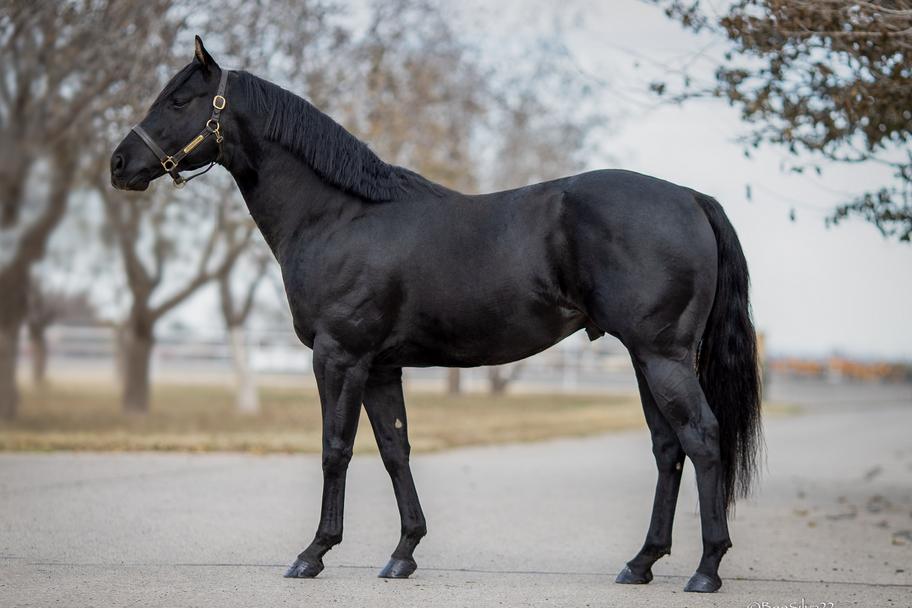
El Kentuck also sired Superior Race Horse Kentucky Valentine. She placed third in the 1974 Challenge Cup Maturity and equaled the track record at Midland Downs for 350 yards in 17.940 seconds. Other racing ROM earners by El Kentuck included Ganoso, Kentucky Lass, El Jay Mite, Sugar Sally, Easy Exit, Kentucky Boy, Kentucky Gin and Kentucks Scorpion. Too Much Kentuck and Miss El Kentuck, sorrel mares by El Kentuck, earned performance ROMs. Altogether, El Kentuck sired 108 registered Thoroughbred and Quarter Horse foals in 21 foal crops. They included twelve ROM earners, four stakes finalists and one stakes winner.
Years later, Pollard told author Betty Barr and George Yakobian that El Kentuck was a “hell of a racehorse, but he wasn’t a stud. He had good-looking colts that couldn’t run, kind of like a good-looking woman that can’t cook.” Despite their inability to run, some of his daughters produced nice horses. Oneeye Jill, a chestnut mare by El Kentuck, produced Ole Colonel, a Superior Race Horse that set a new track record. His daughters also produced racing ROM earners El Leo Bug, Kentucky Native, Kentucky Jet, El Easy Man, Kentucky Dividend and Stars On Who. Fancy Comet, a performance ROM earner, was also out of an El Kentuck mare.

El Kentuck’s last foal, Kentuck Doll, was born in 1983 when he would have been 25 years old. Although Pollard’s assessment of this beautiful stallion not being much of a sire was correct, he does have descendants on at least three continents. His daughter Easy Exit was exported to Australia where she produced a family of stock horses and his great-great granddaughter, The Crimson Princess, produced barrel horses in South America.
Sources: Equineline, Equibase, American Quarter Horse Association, All Breed Database

 The Western Thoroughbred